Crypto does not automatically mean anonymous
A blockchain address can be pseudonymous while a casino account is linked to a named person. Operators may collect email, identity, address, location and funding information. Payment technology and account identification are different systems.
A review promising no KYC forever should explain the exact evidence behind that claim. Some operators allow early actions before a request, while reserving later checks. That is different from an unconditional promise that documents will never be needed.
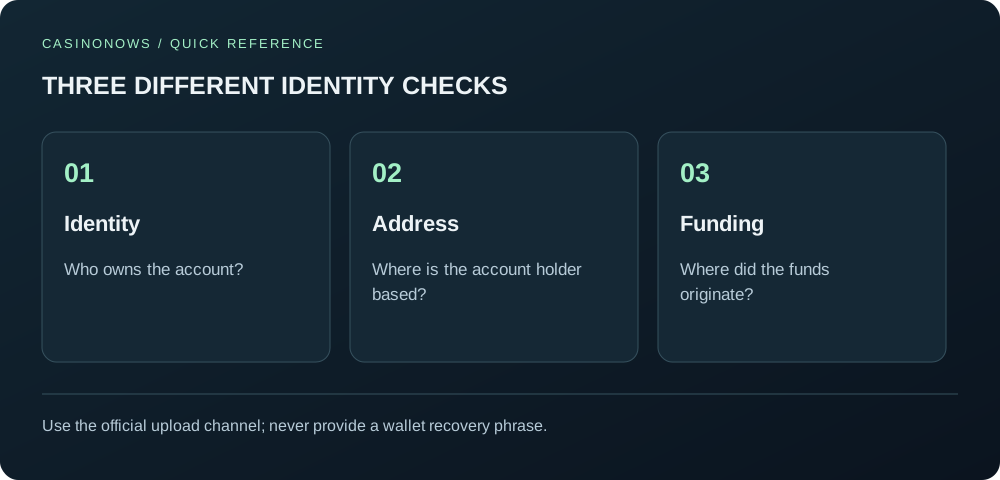
Understand the stages
Email verification confirms control of an inbox. Basic account information records details such as name or date of birth. Identity verification checks a person against documents. Address and source-of-funds checks answer additional questions. Completing one does not necessarily complete all the others.
Shuffle describes email and Level 1 checks before deposits. Gamdom explains circumstances in which verification may be requested later. The timing differs, but neither example supports treating crypto funding as a universal exemption.
What to establish before depositing
Read when the operator can request documents, which functions can be restricted during a review and how the genuine upload process works. If you cannot accept those conditions, decide before sending funds. The point is informed choice, not finding a workaround.
Use accurate information. A mismatch between the account and submitted documents can create avoidable problems. Do not use another person's identity or open a second account to escape a review. If the existing account information is wrong, ask official support about the proper correction process.
Protect the document channel
Reach the verification process from the genuine operator site or a verified official support route. Be cautious with unsolicited messages offering to accelerate a withdrawal. A logo and a familiar display name do not establish the sender's identity.
Upload only what the legitimate process requests. Do not send wallet recovery phrases, private keys or unnecessary account information. Keep a record of what was submitted and when, but store any local copies securely. A public forum is not an appropriate place for identity documents.
Read the privacy terms as well
Look for the purposes of collection, service providers, retention, international transfers and ways to make a privacy request. A promise that documents are secure is not the same as a clear explanation of how information is used. Applicable rights and obligations depend on the operator and jurisdiction.
This guide does not provide a universal legal assessment of privacy compliance. It helps identify the questions worth checking. If a policy is unclear or unacceptable to you, choosing not to create an account is a valid response.
Wallet history can reveal information
Public blockchain activity can be connected across transactions. An operator or service provider may screen wallet activity in addition to checking an identity document. Stake's published AML policy describes wallet-related monitoring as part of its process.
Do not interpret this observation as advice to conceal activity or bypass checks. The practical lesson is that the privacy properties of a blockchain address differ from a promise of anonymity. Understand the information a service can associate with the account before using it.
Compare policies without inventing certainty
A useful comparison says what each operator's documents establish and what remains unknown. It does not turn a single successful withdrawal into a guarantee or a lack of an immediate upload screen into proof that checks never happen.
Read the review methodology for the limits of our research. If verification is already delaying a withdrawal, the withdrawal guide helps identify the stage and the information needed for a precise support request.